


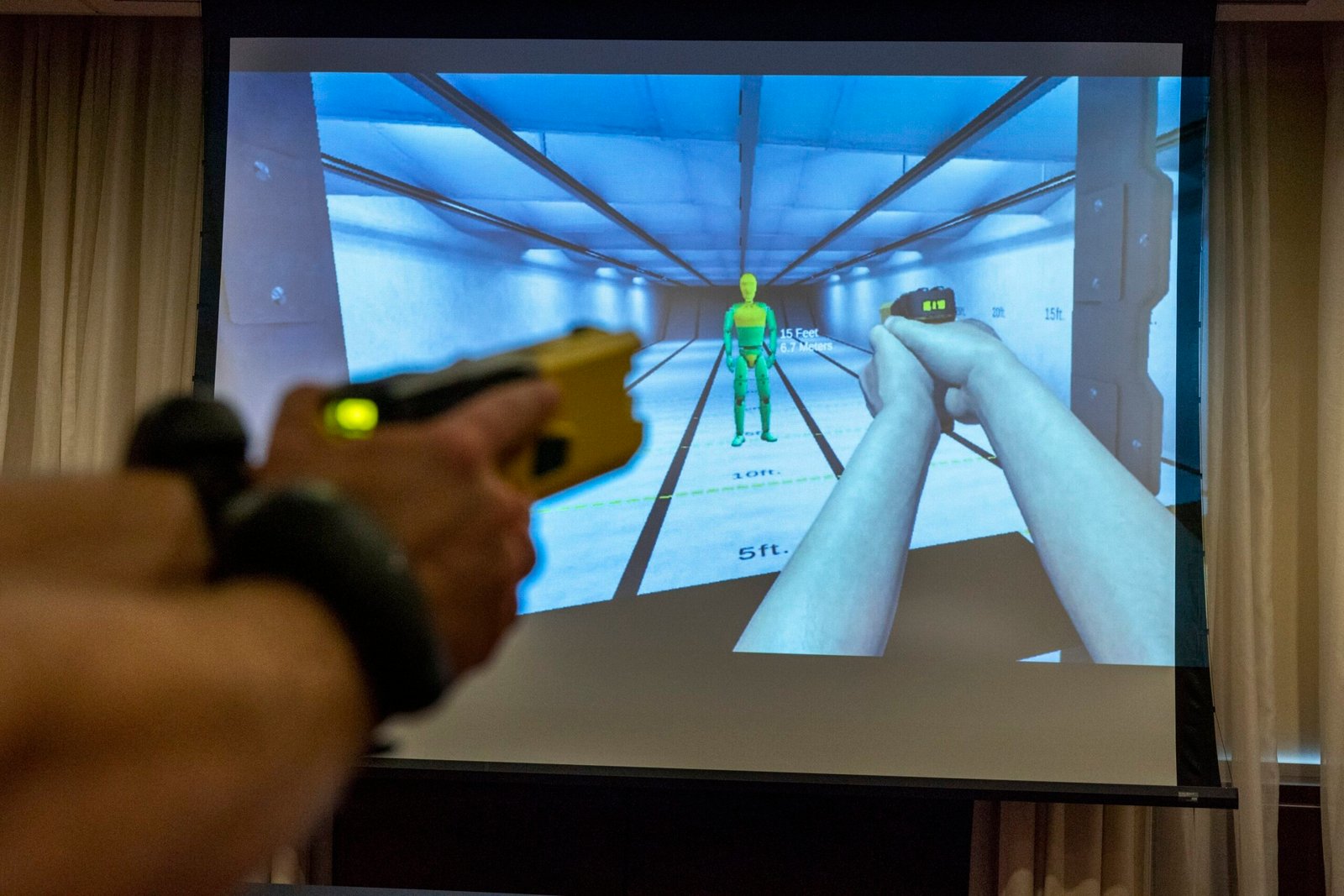
As the demand for more effective and realistic law enforcement training continues to grow, police departments are increasingly exploring virtual reality (VR) as a valuable training solution. Unlike conventional methods, police academy VR training simulator allows officers and recruits to experience immersive, lifelike situations without being exposed to the actual risks associated with real-world exercises. This technology can strengthen decision-making, improve empathy, build confidence, and prepare officers to respond more effectively under pressure.
The growing role of VR in police training and preparedness
Continuous training is essential for law enforcement professionals who must protect their communities while adapting to changing circumstances. Social expectations, emerging technologies, evolving public safety concerns, and updates to state and federal regulations all require officers to maintain current knowledge and skills. Yet traditional training programs can be expensive and demanding. Classroom instruction and live exercises require significant resources, while taking officers away from their regular duties. More importantly, recreating the unpredictable and emotionally intense situations officers encounter on the job can be extremely difficult in a conventional training environment.
Virtual reality helps address these limitations by creating controlled but highly realistic simulations. A police academy VR training simulator allows new recruits to repeatedly practice challenging situations, make decisions, assess consequences, and learn from mistakes without putting themselves or others in danger. This makes VR a practical investment for agencies seeking to modernize their training programs.
VR can support a wide range of fundamental law enforcement skills. Officers can practice firearm handling, high-risk arrests, tactical movement, traffic stops, building searches, and responses to active-threat situations. Because scenarios can be repeated and adjusted, trainees can encounter different outcomes and develop greater flexibility in their decision-making. This repeated exposure can also help officers become more comfortable responding to stressful circumstances. Realistic simulations can also improve an officer’s confidence. When trainees have already encountered challenging situations in a controlled environment, they may feel better prepared when facing comparable circumstances in the field. VR gives them an opportunity to test different approaches, understand potential consequences, and become more comfortable making decisions under pressure.
One of the most valuable applications of VR is training officers to manage tense encounters without immediately resorting to force. Virtual subjects can respond differently depending on an officer’s words, tone, and actions, giving trainees opportunities to practice communication and negotiation. Such exercises can strengthen verbal de-escalation abilities, emotional control, and responses to individuals experiencing mental health crises. Repeated practice can help officers recognize warning signs and select more appropriate responses during difficult encounters.
Ultimately, effective VR training can contribute to improved performance in real-world encounters. Officers with stronger communication, decision-making, and de-escalation skills may be better equipped to resolve conflicts safely. Greater preparedness can potentially reduce unnecessary use-of-force situations and support more positive interactions between law enforcement and the communities they serve. As VR technology continues to advance, its role in creating safer, more flexible, and more effective police training programs is likely to become increasingly important.
