


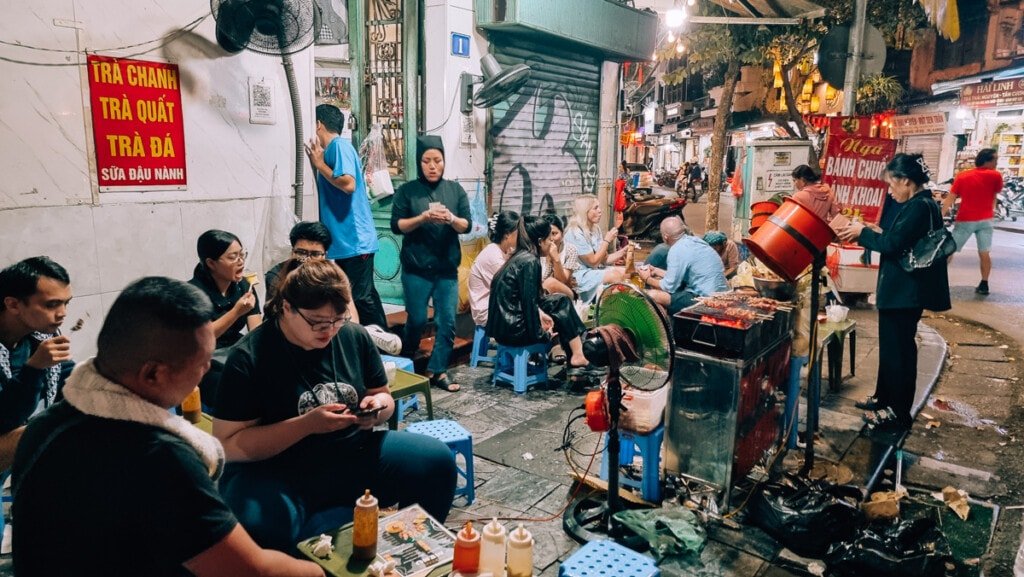
Hanoi’s Old Quarter is a maze of narrow, winding streets, bustling motorbikes, and small plastic chairs. My only objective in visiting was to eat my way through every stall in the quarter. The city is generous to those who walk slowly and enjoy meals. I made sure to stick to vegetarian dishes only on my trip, but I still managed to satisfy my appetite. One thing I learned while at the Old Quarter is that street food is not just something you eat when on the go – for locals it’s a way to socialise with others and enjoy a chat.
Why the Hanoi Old Quarter is a food lover’s dream
Hanoi’s Old Quarter is over 1000 years old. The streets used to have names of goods sold by numerous guilds. Walking through the streets of the Old Quarter makes one feel they are actually walking through a huge street kitchen where cooks prepare food and customers are eating their meals on small stools. I think that this simplicity is what I loved most.
Landing in Hanoi hungry and rested
A food trail needs a good appetite and a rested body. On my flight in, the business cabin gave me enough room to sleep properly, and the in-flight services made me comfortable. I had a hot meal and landed calm instead of tired. By evening, I was already walking into the Old Quarter. My stomach felt ready, and my feet felt light.
Hoan Kiem Lake and an early Hanoi morning
Hoan Kiem is a lake at the edge of the Old Quarter. Here, people work out before dawn. They either jog or dance by the water. A red wooden bridge connects the lake to Ngoc Son Temple. It took me an hour and a half to walk along the lake.
Sticky rice for a slow Hanoi breakfast
Xoi is a type of sticky rice that locals love. Sellers sell it either from baskets or from carts. I ordered it with brown beans, fried onions, and peanuts. The sticky rice was soft and sweet. It was wrapped in khita paper. I sat at my little table outside and watched people start their day.
A tofu banh mi near the Hanoi lanes
Banh mi is a French baguette that has been popular in Vietnam since the French colonial era. When ordered from a small stall, my vegetarian banh mi came with tofu, cucumber, and some herbs. The final touch was a drizzle of sweet sauce. The bread cracked loudly in my hands. It cost very little and filled me for hours.
Vegetarian eateries tucked beside Hanoi’s pagodas
Many Buddhist families in Hanoi eat vegetarian on special days of the month. Small eateries called quan chay serve those meals near pagodas. I found one down a quiet alley. The owner served mushroom spring rolls, braised tofu and rice with greens. Everything tasted light and fresh. She smiled when I asked for a second helping of tofu.
Fried tofu with fresh herbs in Hanoi’s Old Quarter alley
Fried tofu with herbs is a casual Hanoi favourite. Cooks fry the tofu until golden, then serve it with rice noodles, cucumber and basil. A tangy dipping sauce comes on the side. I found a tiny alley place with few stools. The tofu was crisp outside and soft inside. I ate quietly while scooters rolled past.
Coffee culture in the heart of Hanoi
Hanoi takes coffee seriously. Cafes line almost every lane, many on upper floors above shops. I tried ca phe sua da, a strong iced coffee with sweet condensed milk. A small metal filter dripped slowly over my glass. The drink was bold and creamy. I sat on a narrow balcony and watched traffic below for an hour.
Sweet soups and sugarcane juice in Hanoi
Che is a delicious dessert soup prepared using jelly, beans, coconut milk, and ice. Different stalls sell different variants of Che. I sampled Che made with mung beans and coconut cream. It was soft, cool, and very smooth. I also enjoyed freshly squeezed sugarcane juice mixed with kumquat juice, which was slightly tangy and refreshing.
Final thoughts
Visit the city between October and April when the weather is cooler. Walk at a steady pace and cross the roads carefully because of the many scooters driving around. Carry enough cash as most stalls do not accept cards. Find busy places where food is freshly cooked. Let them know that you prefer vegetarian food.
I came to Hanoi only for the food experience, but I gained something more significant. Each stall had its own story. I did not even need to visit luxurious restaurants. All I required were sticky rice, bread, and Che.
