


Maintaining a residential property requires regular attention to areas that are not always easy to reach. Whether it is a small apartment building or a large condominium complex, essential maintenance tasks include inspecting rooftops, cleaning drainage systems, servicing mechanical equipment, and accessing elevator pits, utility rooms, and storage mezzanines. When these spaces lack proper access, routine maintenance can become time-consuming, expensive, and potentially hazardous.
Custom fixed access ladders provide a practical, long-term solution to these challenges. Designed to suit a building’s specific dimensions and access requirements, these permanently installed systems create a dependable route for maintenance personnel to move between different levels. For property managers, architects, housing associations, and building owners, they offer an effective way to improve workplace safety, simplify maintenance activities, and support long-term property management.
Benefits of installing custom fixed access ladders at residential buildings
Many residential buildings depend on portable ladders to reach rooftops and elevated service areas. Although these ladders may appear convenient, they can introduce unnecessary risks when used frequently. A ladder that is positioned incorrectly, placed on an uneven surface, or inadequately secured may shift during use. Moving from a ladder onto a rooftop or elevated platform can also be challenging, particularly when the landing area offers limited space. Such difficulties can affect worker safety and delay essential maintenance activities. They may also create compliance concerns if the access arrangement does not satisfy applicable safety requirements.
Custom fixed access ladders can prove to be a more dependable alternative. Once properly installed, it remains in position and provides a consistent route to the required location. Maintenance technicians, electricians, roofers, and building caretakers can use the same access point whenever inspections or repairs are necessary. This reduces the need to transport, position, and secure temporary equipment before beginning work.
Residential buildings differ in height, architectural design, rooftop configuration, and the location of essential equipment. A standard ladder may not provide the correct reach or clearance for every situation. Custom fixed access ladders address these differences by being manufactured according to the building’s measurements and intended use.
Depending on the property’s requirements, these systems can accommodate several applications, including:
- Roof hatch access: Ladders can connect interior service areas with rooftop openings, making it easier for authorized personnel to reach the roof.
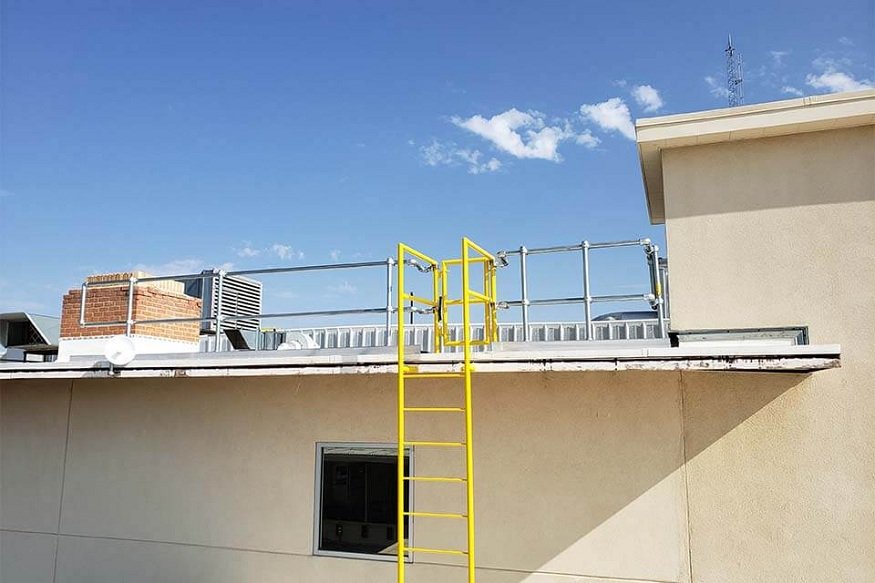
- Exterior rooftop access: Specially designed ladders can provide access from ground-level or intermediate areas to elevated roof surfaces.
- Parapet access: Suitable configurations and handholds can help users negotiate raised roof edges more safely.
- Mezzanine access: Fixed ladders can connect storage areas, utility platforms, and intermediate floors in larger residential complexes.
- Crossover access: Purpose-built arrangements can help maintenance workers navigate around or over rooftop pipes, ducts, and other obstructions.
- Elevator pit access: Properly specified ladders can provide entry to lift pits for inspection, servicing, and repair work.
By considering the building’s actual configuration, a custom solution can accommodate limited space, unusual heights, and specific entry or exit requirements. This approach helps prevent the inconvenience of installing equipment that does not fit the available area.
